Trace and access claim refused, or paid short: what to check and where to take it
Ask the insurer to confirm in writing which part of the invoice it refused and which policy wording it relied on.
Source: five Ombudsman decisions, below.
Establish which part of the trace and access claim was refused
Insurers use the words trace and access for locating a leak and cutting in to get to it. One invoice can cover five jobs, and an insurer may refuse one and pay another, so ask about each job separately.
One published decision, job by job
- Finding the leakTo be paid
- Opening up to reach itTo be paid
- Repairing the pipeNot decided
- Putting the opening backTo be paid
- Repairing what the water damagedRefused
What happened in this decision
The insurer declined the water damage as gradual, and the Ombudsman still told it to pay for the search and for putting back what the search disturbed. The pipe repair was not part of the decision.
The five jobs and who does each are on the home page.
No damage, no cover: five Ombudsman decisions on the same argument
In each of these five decisions the insurer refused the search because there was no damage, or no accepted damage claim.
| Decision | What the policy said about damage | Result |
|---|---|---|
| AADRN-3869874 | It paid for "locating the source of the damage". It did not say the damage claim had to be accepted first. | UpheldAA to pay for the search and for putting back what it disturbed.What happenedA plumber found a leaking pipe. AA refused the water damage as gradual, then said the search was therefore refused as well. |
| AdmiralDRN-3805350 | Cover applied "if the buildings are damaged". This requires damage, which she had shown. It does not require a damage claim. | UpheldAdmiral to settle from her invoice, less the pipe repair itself.What happenedThe owner claimed only for finding and reaching a leak under a bath. Admiral said that was covered only if she claimed for the damage too. |
| AvivaDRN-4629330 | "If your home has been damaged by a water leak, we'll pay reasonable costs to remove any part of the internal structure of the home needed to find the source of the leak." | Not upheldA smell was not damage, and the policy did not pay for repairing the leak.What happenedA smell led a plumber to a waste pipe leaking under the kitchen floor. The owner claimed the pipe repair invoice as search cost. Aviva knew of no damage. |
| Privilege (U K Insurance)DRN-5416826 | The cover was to "find the source of the leak… that is causing damage to the buildings". | Not upheldThe insurer could rely on his answer, and would reconsider if damage appeared.What happenedWater ran down behind a shower. Asked whether damage was visible, the customer said it was not and that he had a good idea where the leak was. |
| AXADRN-4131440 | The policy paid costs the customer runs up "in tracing and accessing the source of the damage to the home". | Not upheldAXA should have done more, but the owners spent about what their excess would have been.What happenedAXA declined to help because no water damage could be seen. The owners arranged for the leak to be found, the pipe repaired and the floor put back themselves. |
- Both decisions for the customer: the policy did not make the search depend on a damage claim.
- Two decisions for the insurer: the policy tied the search to damage, and the customer could show none.
- The fifth turned on the sum involved.
These are five examples, and none predicts the outcome of another claim. Reading the damage wording in your own policy is covered on Trace and Access Cover.
Other reasons given: gradual damage, a known leak, the pipe itself
- Gradual damage. The exclusion applied to the water damage, and the search still had to be paid.
- A leak whose position was already known. Given as a reason for not sending anyone to search.
- The pipe itself. These policies did not pay for repairing it.
How each came up in the decisions
AA's policy excluded damage that builds up slowly, and that exclusion applied to the water damage. The search was different: it had not happened gradually, and AA had said it would have been needed whenever the leak came to light. (DRN-3869874)
The customer said he knew exactly where the leak was. The insurer gave that, with the lack of visible damage, as its reason for not sending anyone to search. (DRN-5416826)
Aviva's customer was claiming a pipe repair invoice. Admiral was allowed to take the pipe repair off the invoice before paying the rest. (DRN-4629330, DRN-3805350)
Drawn from the same five decisions. Insurers give other reasons as well.
Paid, but less than the invoice
The search may have its own limit, and an excess (the part of any claim you pay yourself) may also be deducted. Ask which figure was applied, and to which of the five jobs.
An example from the Admiral decision
That policy did not appear to have a separate excess for the search, and the ombudsman considered it reasonable to deduct the policy's excess for water damage.
Limits and excesses are covered on Trace and Access Cover.
Source: Financial Ombudsman Service decision DRN-3805350 (PDF). Read on 6 October 2026.
When the policy turns out not to include this cover
Finding and reaching the leak is then at your own cost. If you believe the insurer has misread the policy, the complaint route below remains available.
For the cost of detection, see Leak Detection Cost.
How to complain about a refused trace and access claim
- Complain to the insurerIt has up to 8 weeks
- Get its final response
The letter giving the outcome.
- Go to the OmbudsmanWithin 6 months
- The Ombudsman's service is free, and you do not need to pay anyone to represent you.
- You can also refer the complaint once the insurer's 8 weeks have passed without a response.
- Eligibility rules and exceptions apply, so check its page for your own case.
Read the Ombudsman's wording
For most complaints, a business has up to 8 weeks to consider a complaint.
You will need to make a complaint to us within 6 months from the date on your final response.
Our service is free and easy to use. You don't need to pay anyone to represent you, for example, a lawyer or claims management company (CMC).
The limits are the Ombudsman's own, quoted from its page as it stood on 6 October 2026.
Source: Financial Ombudsman Service, How to complain. Read on 6 October 2026.
What the rules say an insurer must do
An insurer must not reject a claim unreasonably, and must handle it promptly and fairly.
Read the rule in full
The Financial Conduct Authority's rules say an insurer must:
(1) handle claims promptly and fairly;
(2) provide reasonable guidance to help a policyholder make a claim and appropriate information on its progress;
(3) not unreasonably reject a claim (including by terminating or avoiding a policy); and
(4) settle claims promptly once settlement terms are agreed.
If the argument is about whose firm does the work, read whether you have to use your insurer's contractor.
Source: Financial Conduct Authority Handbook, ICOBS 8.1.1. Read on 6 October 2026.
What a leak detection report can and cannot prove
ADI's own terms say that where ADI did not open up and repair the leak itself, the position its engineer gives does not represent a definitive claim as to the location of a leak
.
Reading a report line by line is covered on Loss Adjuster Leak Detection.
Source: ADI Leak Detection terms of service, clause 19. Read on 6 October 2026.
Firms that offer to pursue the claim for you
You do not have to pay anyone to complain. If you want paid help, check the firm on the Financial Conduct Authority's register before signing anything.
What the loss adjusters' institute advises
A loss adjuster is a person who assesses an insurance claim. The Chartered Institute of Loss Adjusters warns that you may meet people who call themselves claim preparers, claim managers, loss assessors, or similar
.
Its advice: it is strongly recommended that you appoint a Chartered Loss Adjuster
, who will use the post-nominals ACILA or FCILA
.
Adjusters and assessors are explained on Loss Adjuster Leak Detection.
Sources: Financial Ombudsman Service, How to complain; Chartered Institute of Loss Adjusters, Advice for policyholders. Read on 6 October 2026.
Example from ADI's records: a report sent to an insurer in Lewes
Water had appeared at floor level in a small WC beside a hallway. Skirting boards were stained and the door frame had begun to rot.
- What was opened
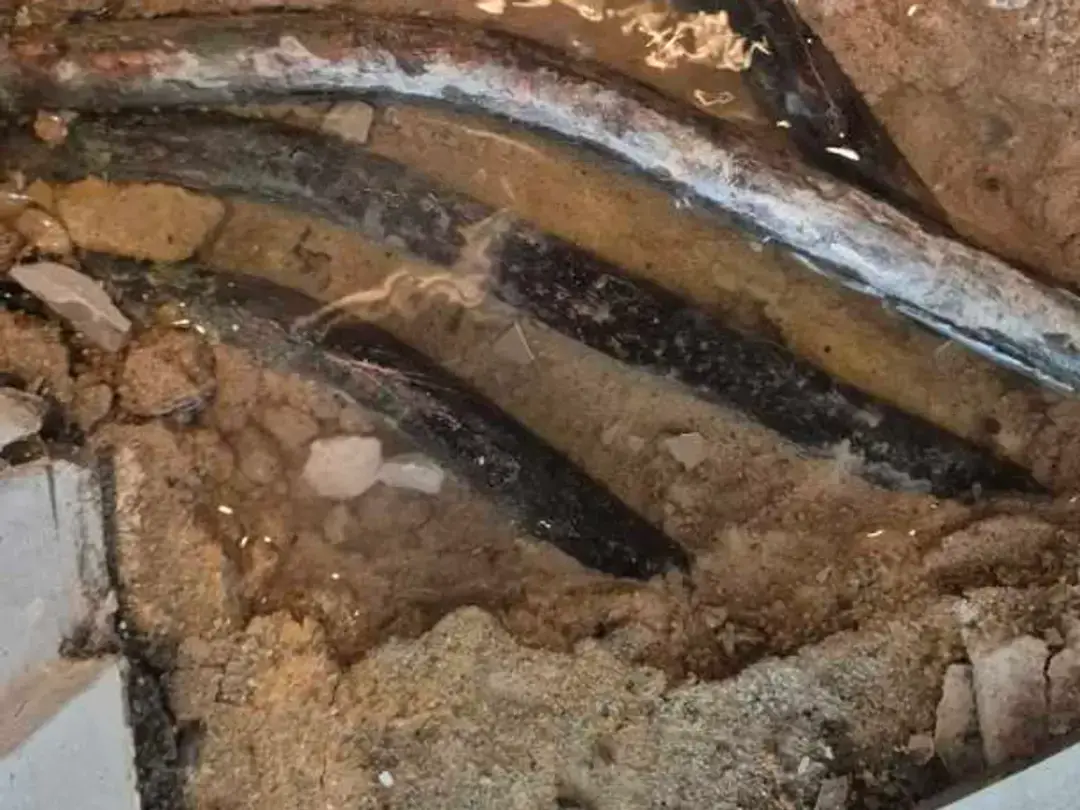
- The floor tiles and the concrete layer beneath them at one doorway, the place the tests had identified.
- What was found
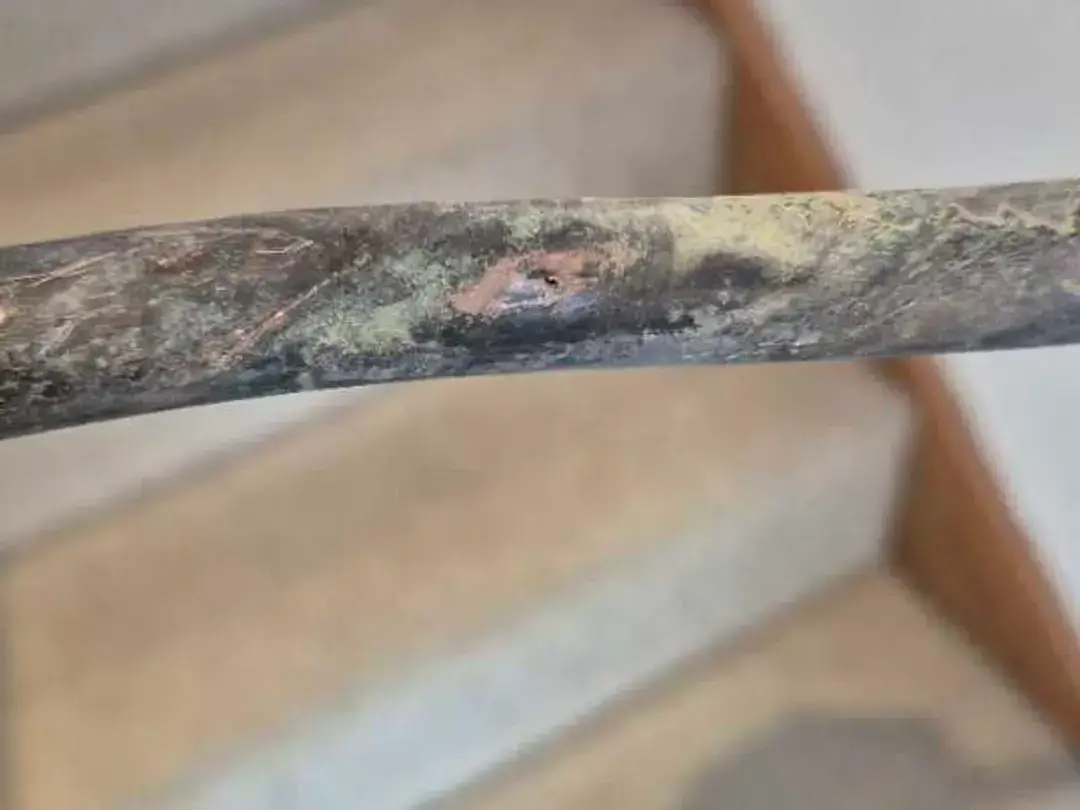
- A heavily corroded copper mains pipe running beneath the heating pipes, in saturated concrete.
- Who repaired it
- ADI. The failed section was renewed and pressure tested.
- What happened next
- The engineer recommended forwarding ADI's report to the insurer, as the route to arranging drying and the remaining work.
- What the record does not show
- How the insurer responded. The record covers the search and the repair only.
From ADI's record of the job. It is one job, given as an example, and it does not show what will happen in yours.